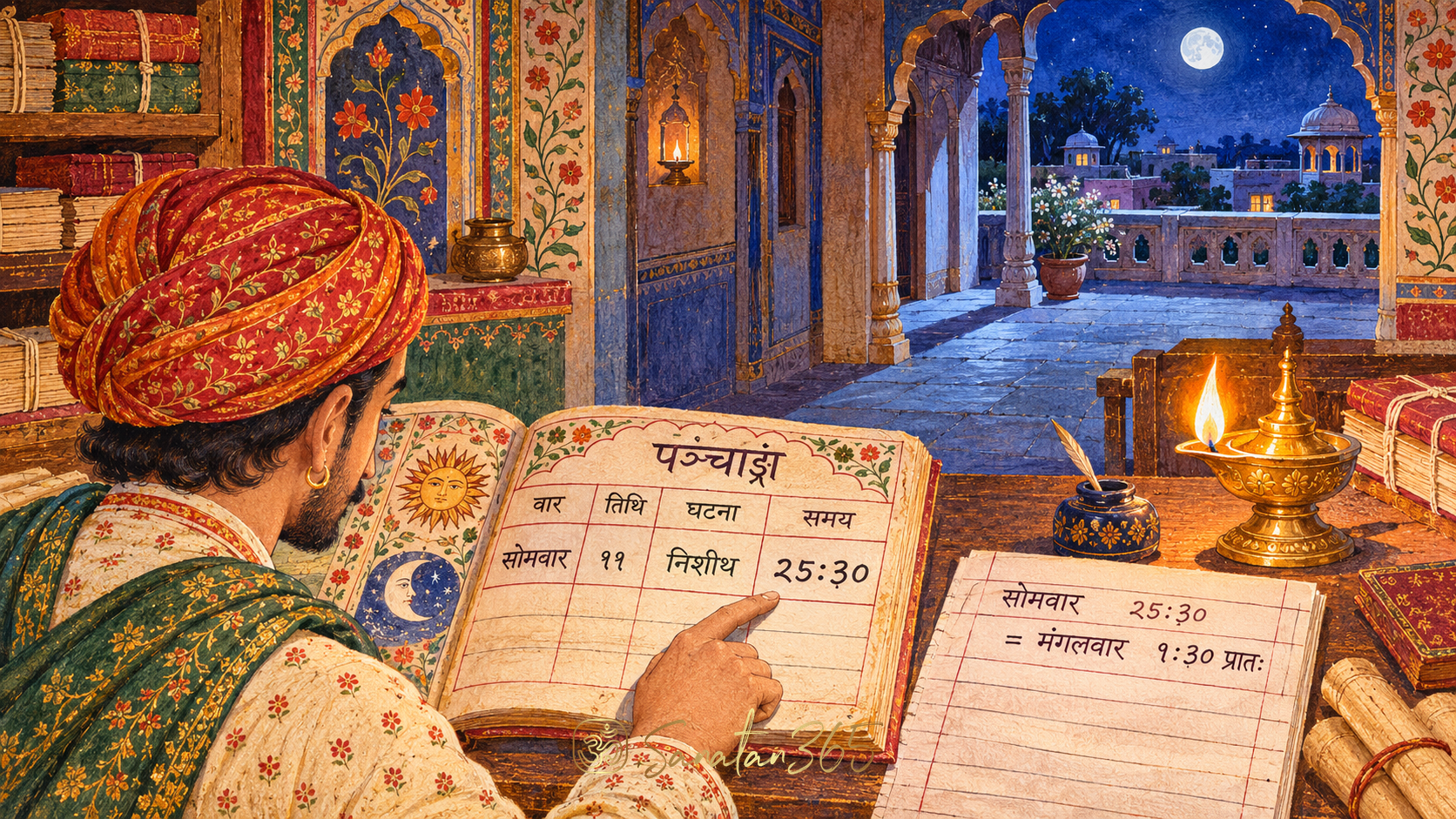
Panchang Time After Midnight: How to Read 25:30
A Panchang can print 25:30 beside one date while the event occurs at 1:30 a.m. on the next. Learn to carry the date and time together.
A page headed Monday can contain an event that a phone calendar puts on Tuesday. The clue may be as small as an hour written as 25.
To read Panchang time after midnight in the extended-hour convention used by India's Rashtriya Panchang, subtract 24 from an hour of 24 or more and advance the printed civil date by one day. A listing of 25:30 on Monday becomes 1:30 a.m. on Tuesday in the same time zone. A pañcāṅga (पञ्चाङ्ग, five-part Hindu almanac) can keep an overnight event with the day it follows while an ordinary calendar assigns it to the next date.
How does Panchang time after midnight work?
The Positional Astronomy Centre's explanatory notes explicitly describe hours written beyond 24. Under this system the overnight continuation can stay on the earlier row. The notes give 25 and 26 hours as examples corresponding to 1 and 2 a.m. on the next Gregorian day. These labels tell the reader both the distance past midnight and the row to which the publisher has attached the event.
Consider the printed row as a page in a diary that follows the evening into the night. A note written under Monday can report a sound heard after midnight without making the sound earlier. In an extended-hour clock the number carries that relationship. The conversion for a modern appointment calendar gives the same instant a different date-and-clock label, because that calendar opens a new date at midnight.
The convention is particularly useful when there are several changes across an evening and night. Imagine a table with one entry at 22:10 and another at 25:30 under the same weekday. Both entries are easy to scan in sequence because the second number remains larger. If the publisher wrote 01:30 on the same row without any date indication, the small number could be mistaken for an event early on that same date. The extended hour makes the sequence visible at a glance.
Key takeaway. The printed row gives the reference date. The hour tells the reader whether the event stays on that civil date or moves into the next one.
What does 25:30 in a Panchang mean for the date?
Read the full entry before changing anything. Suppose a line headed Monday shows 25:30. Leave the minutes at 30, subtract 24 from the hour 25, and move Monday forward to Tuesday. The resulting entry is Tuesday at 01:30, which is 1:30 a.m. The same conversion handles 24:00. In this notation that is 00:00 at the beginning of the next civil date. A listing at 23:59 remains on the printed date.
The operation carries across a month boundary just as it carries across a weekday. In an illustrative calendar, an entry of 26:10 next to 30 April becomes 02:10 on 1 May. The month changes because the civil date advances. The example uses a made-up table entry to demonstrate the operation. It is neither an April almanac reading nor a claim about the position of the Moon on that date.
The common mistake is to convert the hour while leaving behind its date. Someone who writes “1:30 a.m.” next to Monday has moved the event a full day earlier. A second mistake is to move the date forward once manually and then misread a note already converted by another person as though it still needed the same operation. Copying the unconverted line beside the converted line during a check can make that visible.
A simple working note can be written as “printed Monday 25:30 → civil Tuesday 01:30.” Adding the printed date as well as the weekday makes the note usable later, when a weekly cycle may have passed. Keeping the almanac's time zone alongside it preserves a third piece of information a household member needs if they are reading from somewhere else.
Key takeaway. Convert the hour and advance the civil date in the same step.
Which event does the listed time mark?
Converting the clock answers when a listed instant occurs. The column heading and the table's legend explain what happens then. The India Meteorological Department's publication overview distinguishes the almanac's rise and set times from its calculations for the lunar date, lunar mansion, and other entries. A bare number from one of those columns cannot carry the whole meaning into a reminder on its own.
For example, tithi (तिथि, lunar day) in a table concerns an interval determined by the relationship of the Moon and Sun. On a page that expressly labels a time as the end of a tithi, the listed instant marks the end of that interval. That use differs from a time printed for an event such as moonrise. A beginner can read the guide to the five limbs of a Panchang to see why an almanac row holds several kinds of information together.
A second distinction concerns the scale the table is describing. Karaṇa (करण, half a lunar day) measures a subdivision of a tithi, while the colon and digits in 25:30 are clock notation. The guide to reading a half-tithi in a Panchang explains the subdivision. The extended hour used beside a listed phenomenon does not add an extra hour to the day or introduce a new lunar unit. It expresses the instant in relation to the printed row.
A reader can test comprehension by completing a full sentence. “On Tuesday at 1:30 a.m. this table says the named interval ends” communicates a different claim from “On Tuesday at 1:30 a.m. the Moon rises.” If the column or legend does not support either sentence, the reader can preserve the original label and check the publication before acting on it.
Key takeaway. The column heading tells what occurs at the converted time.
What should you copy after a Panchang time conversion?
Start with the table's printed date and event label. Check the city's name or the reference location when one is given, and check the time standard used in the table. The publication overview describes city-specific rise and set times alongside astronomical calculations. Copy the time from the relevant column before changing the way it is displayed. A well-transcribed number from the wrong city's column still describes the wrong entry.
Now convert the printed hour and date. A practical reminder title can give the relevant event in ordinary language and retain a short source note, such as “Almanac row Monday, 25:30.” The calendar entry itself takes Tuesday at 01:30. For a time listed in Indian Standard Time, keep that time zone attached when entering it. If the device displays another zone, let its calendar perform the zone conversion using the correct date and zone, then check the displayed result.
The date advance and the time-zone conversion are distinct operations that are easier to check in sequence. Imagine a family member receives only a screenshot of the figure 25:30 while abroad. The arithmetic can identify 01:30 in the source's zone. It cannot identify the event's local date where the recipient lives without the original date and the zone. A complete note carries all three pieces forward. If the publication gives a separate local table for the destination, consult the appropriate table rather than assuming every listed phenomenon has the same local reading.
When the entry informs a family observance, the precise conversion can help people discuss what the table says. The explanation of the sunrise-to-sunrise weekday gives context for the way a traditional day may be tracked. The group can retain that association in its discussion and still enter the appropriate civil date for anyone receiving an alarm or travelling to join them.
Key takeaway. A useful reminder preserves the event label, civil date, clock time and applicable zone.
How can two almanacs write the same instant differently?
One edition can keep a post-midnight entry on an earlier row as 25:30. Another can print 01:30 with a next-day mark, or place that entry on the next calendar date. Both can express the same instant if the reference date, event and time zone agree. The visual resemblance of two rows is less important than how each edition defines its date and time fields.
When two sources appear to disagree, take one entry from each and write it as a full civil timestamp first. If both become the same date and time in the same zone, the apparent difference was in the presentation. If a difference survives, confirm that the labels refer to the same event. A table reporting an interval's ending and a table summarising the interval current at sunrise can be answering different questions even on the same page.
Also give the reader a way to trace the comparison. Suppose a relative sends a plain “Tuesday 1:30 a.m.” in a family message. A useful follow-up includes the reference place, time zone and name of the column they used. The person comparing that message with the earlier row can then reproduce the conversion without relying on memory of the screenshots. This is particularly helpful when the table spans a date boundary and the source is consulted later.
Consider one last check at a change of year. A fictional December 31 row shows a phenomenon ending at 24:40. The matching civil timestamp is January 1 at 00:40 in the source time zone. A handwritten note saying “January 1, 12:40” drops the distinction between morning and afternoon. A note saying “00:40, January 1” keeps it. The person who sets the reminder can compare the source and the calendar in reverse, asking whether going back forty minutes reaches the midnight immediately after December 31.
When several times appear together, it helps to check each one against its own row. A 23:50 entry and a 24:10 entry on December 31 are only twenty minutes apart. In a calendar they belong on different dates. This is the same transition seen from two careful ways of organising the page.
The habit to keep is simple. Read the almanac's own legend and carry its printed date, converted clock time and event label together. That preserves the way the almanac groups the night while making the entry usable in a civil calendar.
Key takeaway. Compare full civil timestamps and event labels before treating two entries as different.
FAQ
What time is 25:30 in a Panchang?
In the Rashtriya Panchang extended-hour convention, it is 1:30 a.m. on the civil date after the one that heads the row. On a Monday row it becomes Tuesday at 01:30 in the same time zone. The number after the colon stays the same.
Does 24:00 mean the beginning or end of a day?
In this notation it is the midnight at the end of the printed civil date. An ordinary appointment calendar represents that same instant as 00:00 at the beginning of the next date. The printed row is needed to say which midnight is intended.
Do all Panchang publications use extended hours?
The Rashtriya Panchang's explanatory notes specify the convention for that publication. Other tables and apps may show next-day entries differently. Read the edition's legend and any next-day marker before converting a time. A time already expressed with a new date should be copied as written.
Does a converted clock time tell me which observance rule applies?
It tells when the named event occurs in the relevant time standard. The event label, the almanac's guidance and the applicable family or local tradition supply the context for using it. A converted time is most helpful when the original date and event label remain available alongside it.
About the author
Sanatan365 Editorial
Bringing Sanatan Dharma to modern seekers through authentic, scripture-grounded content.
Related in Astrology
 Astrology
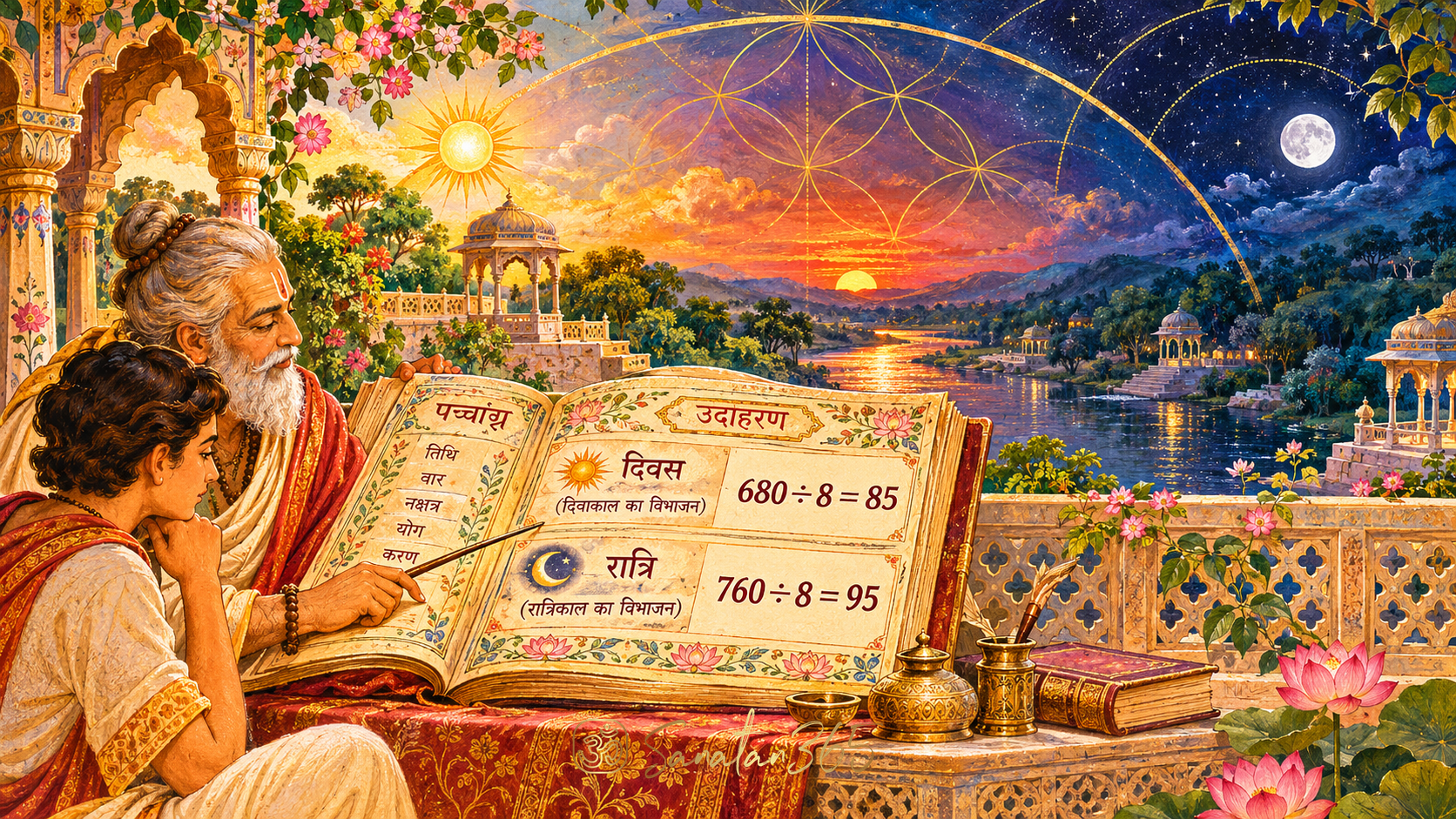
Choghadiya Meaning: Why Day and Night Have Different Slots
Choghadiya divides daylight and night separately. Follow a worked example to see why one slot need not last ninety minutes, then learn how…
 Astrology
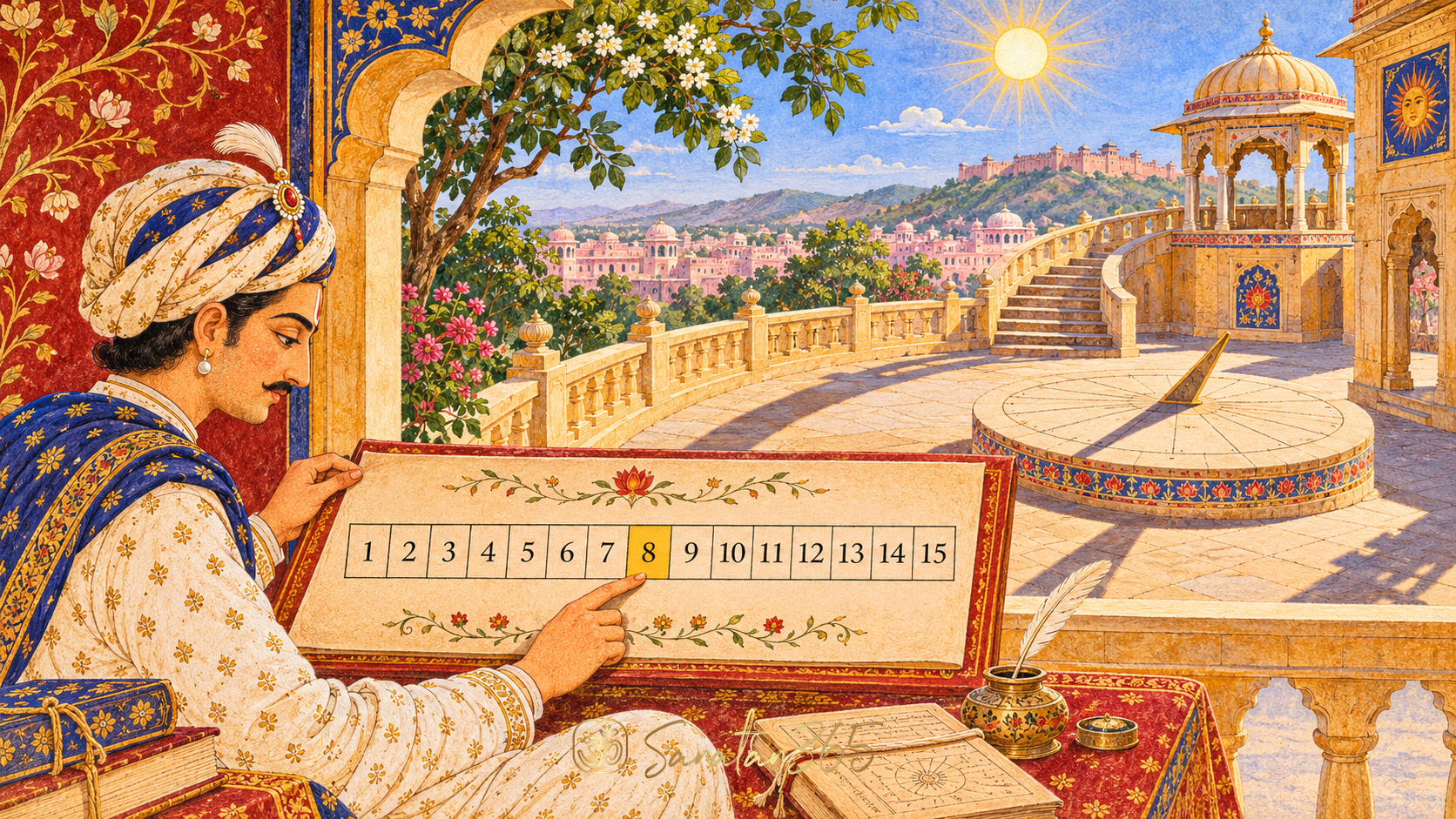
Abhijit Muhurat Meaning: How the Midday Window Is Calculated
See why Abhijit Muhurat moves with local daylight and learn to check the eighth segment in a panchang without assuming a fixed clock time.
 Astrology
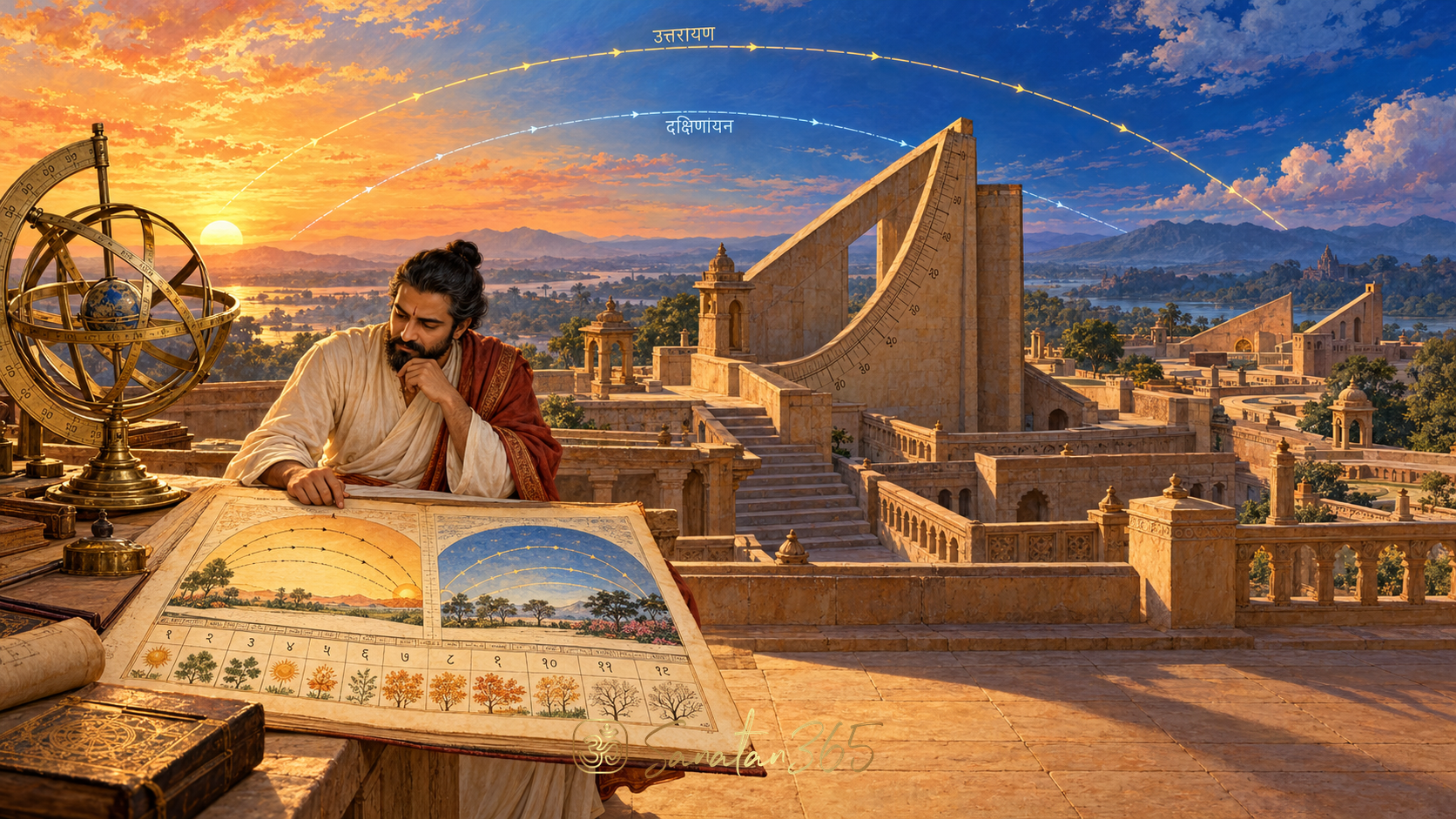
Ayana Meaning: Uttarayana, Dakshinayana, and the Sun’s Two Courses
Understand the two solar half-years, why solstice dates and sidereal calendar markers differ, and how to read an ayana entry without fear o…

