Pranayama Meaning: Yogic Breath as a Hindu Practice of Prana
Understand pranayama as more than breathing exercise: its Sanskrit roots, Patanjali context, practical benefits, and simple ways to begin reverently.
Breath is the one practice that follows a person from temple courtyard to office desk, from dawn prayer to a difficult conversation.
Pranayama meaning begins with prana (प्राण, vital life force) and ayama (आयाम, extension or disciplined expansion): it is the yogic practice of regulating breath so the mind becomes steadier and life energy becomes more refined. In Hindu yoga, pranayama is not merely a wellness technique. It sits inside a larger discipline of body, breath, attention, and inner clarity, especially in Patanjali's Yoga Sutras and later Hatha Yoga traditions.
This matters especially during June's Yoga Week and the approach to the United Nations International Day of Yoga on June 21, when yoga is often presented globally through postures alone. Pranayama reminds us that yoga also trains how we receive, hold, and offer life itself.
What Is Pranayama Meaning in Hindu Yoga?
Pranayama is usually translated as breath regulation, but the Sanskrit points deeper than ordinary inhaling and exhaling. Prana (प्राण) means vital force, breath, or life energy. Ayama (आयाम) can mean extension, expansion, restraint, or disciplined measure. Together, pranayama means the conscious shaping of breath so that prana becomes steady, clear, and available for inner practice.
Patanjali places pranayama after asana (आसन, steady posture) in the eight limbs of yoga. In Yoga Sutra 2.49, pranayama begins after posture is stable, through the regulation of inhalation and exhalation. The next sutras describe breath by place, time, and number, and then point toward a subtler stilling of breath. In other words, the body is made steady first; then breath becomes the bridge toward a steadier mind.
This is why pranayama is not the same as random deep breathing. It is intentional, measured, and connected to dharma (धर्म, sustaining order), self-discipline, and awareness. It asks the practitioner to become less reactive, less scattered, and more present.
For a beginner, a useful distinction is:
- Ordinary breathing happens automatically.
- Breath awareness notices breathing without force.
- Pranayama gently regulates the breath with method and restraint.
- Yogic absorption uses steadier breath as a doorway toward concentration.
Key takeaway: Pranayama means disciplined expansion of life force through breath, not simply taking bigger breaths.
Why Does Breath Hold Such Spiritual Importance?
Many Hindu practices begin by calming the breath because breath changes the inner atmosphere quickly. A restless breath often accompanies a restless mind. A steady breath can create space before speech, action, or prayer.
The Hatha Yoga tradition treats pranayama as a purifier and stabilizer. Classical texts such as the Hatha Yoga Pradipika describe breath discipline as a preparation for deeper yogic states. Modern readers should approach those instructions with care, because advanced practices can involve retentions, locks, and ratios that traditionally require guidance.
The spiritual logic is simple but profound: the breath is where body and mind meet. It is physical enough to be felt, subtle enough to reflect emotion, and rhythmic enough to train attention. When a devotee sits before a diya, repeats a mantra, or settles for meditation, the breath often becomes the first field of practice.
This is also why pranayama pairs naturally with practices already familiar in Hindu homes:
- Before japa (जप, mantra repetition), the breath can soften the mind.
- Before puja (पूजा, worship), the breath can reduce hurry and distraction.
- Before study of scripture, the breath can invite steadiness.
- Before family duties, the breath can help action come from patience rather than impulse.
The Encyclopaedia Britannica overview of yoga notes yoga's broader discipline of bodily control, meditation, and liberation-oriented practice. Pranayama belongs to that larger vision. It is not isolated self-improvement; it is a training in inner order.
Key takeaway: Breath matters spiritually because it is the most immediate bridge between body, emotion, attention, and sacred intention.
How Is Pranayama Connected to Patanjali's Eight Limbs?
Patanjali's eight limbs of yoga move from ethical living to physical steadiness, breath discipline, inward withdrawal, concentration, meditation, and samadhi. Pranayama is the fourth limb, after yama (यम, ethical restraints), niyama (नियम, observances), and asana.
That placement is important. In popular culture, breathwork is sometimes treated as a shortcut. Patanjali's structure refuses that shortcut. Breath practice is most fruitful when supported by honest living, restraint, cleanliness, contentment, discipline, self-study, and devotion to the Divine.
The Yoga Sutras also connect pranayama with the thinning of mental coverings. In the traditional reading of Sutra 2.52, breath discipline helps weaken the veil over inner light. Then, in 2.53, the mind becomes fit for concentration. The promise is not spectacle. The promise is readiness.
For modern practitioners, this gives pranayama a clear role:
- It prepares the mind for dhyana, Hindu meditation.
- It supports steadiness after Surya Namaskar or other movement.
- It can complement Trataka candle-gazing meditation when practiced gently.
- It can become part of nitya puja, daily worship at home by creating a quiet transition into prayer.
This is not about performance. A person may sit for only three minutes and still practice sincerely. The measure is not how dramatic the breath appears; it is whether the breath makes the mind more sattvic (सात्त्विक, clear, balanced, and harmonious).
Key takeaway: In Patanjali's system, pranayama prepares the mind for concentration by refining breath after posture and ethical discipline.
What Are Simple Pranayama Practices for Beginners?
Beginners should start gently. Breath practices are powerful precisely because breath affects the nervous system, attention, and emotion. Force is not devotion. Strain is not depth.
A simple starting sequence can be enough:
- Sit comfortably with the spine upright, on a chair or floor.
- Let the shoulders soften and the face relax.
- Observe five natural breaths without changing them.
- Inhale through the nose for a comfortable count of four.
- Exhale through the nose for a comfortable count of four or six.
- Continue for three to five minutes.
- End with a brief prayer, mantra, or silent gratitude.
This is not an advanced ratio. It is a respectful beginning. The purpose is to make breath steady without creating anxiety or breath hunger.
Another gentle method is sama vritti (सम वृत्ति, equal rhythm), where inhalation and exhalation are kept even. A beginner might use a four-count inhale and four-count exhale. Later, with proper instruction, one may explore longer counts or alternate-nostril practices.
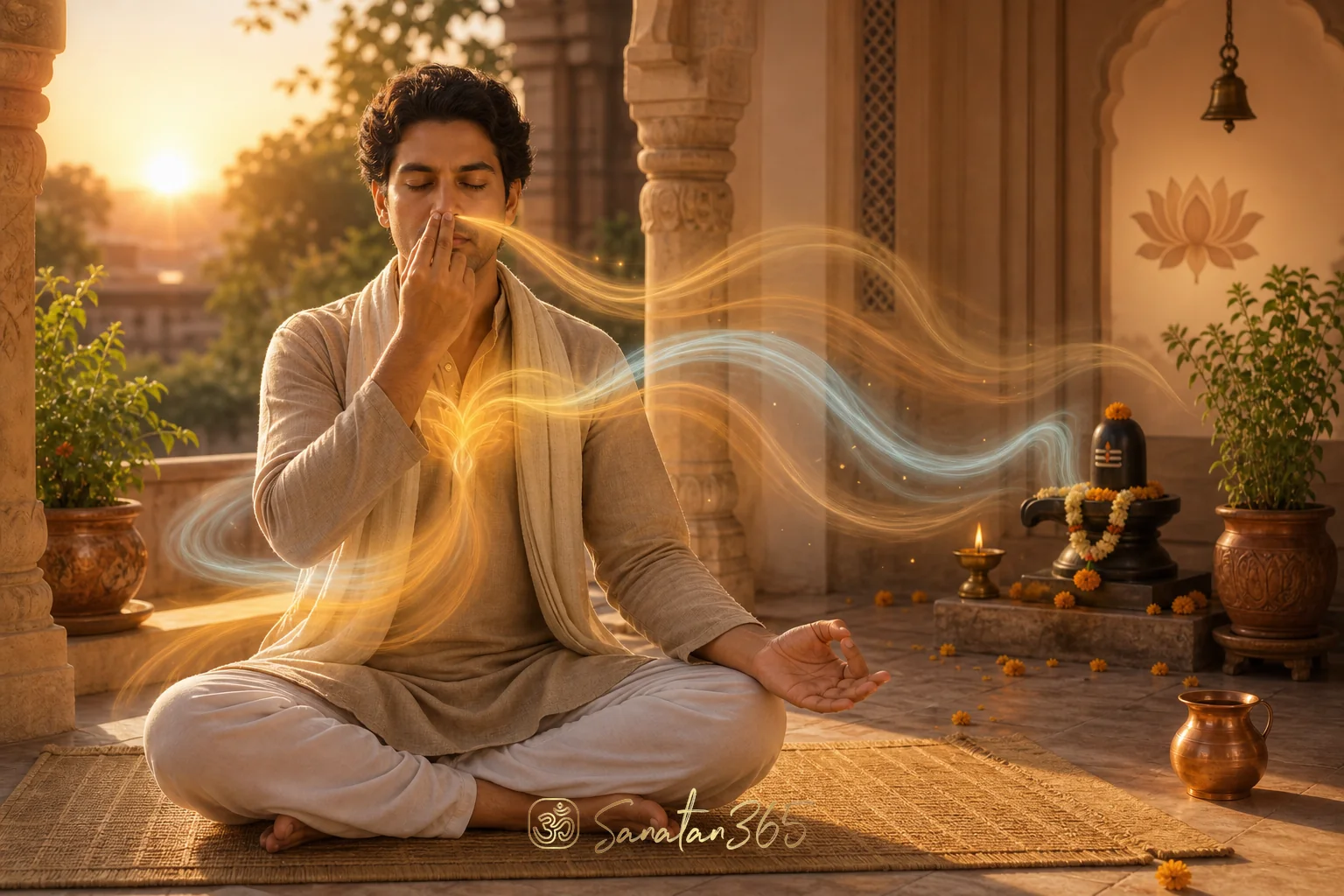
Nadi shodhana (नाड़ी शोधन, channel purification), often called alternate-nostril breathing, is widely practiced in yoga settings. For a cautious beginner, it can begin without retention: inhale left, exhale right, inhale right, exhale left. Keep the breath smooth, not heroic.
Avoid advanced breath retention, forceful kapalabhati (कपालभाति, skull-shining breath), or intense bhastrika (भस्त्रिका, bellows breath) without competent guidance, especially for anyone with medical concerns, pregnancy, panic symptoms, heart issues, or respiratory conditions. This article is cultural and educational, not medical advice.
Key takeaway: The best beginner pranayama is gentle, nasal, unforced, and steady enough to leave the practitioner calmer than before.
How Does Pranayama Fit Modern Daily Life?
Modern life often breaks attention into fragments. Pranayama offers a small daily return to wholeness. A person does not need a retreat, expensive equipment, or a perfect schedule. Three honest minutes can become a threshold between noise and clarity.
For householders, pranayama can fit naturally into daily rhythms:
- Morning: three minutes before puja or scripture reading.
- Afternoon: five balanced breaths before a difficult task.
- Evening: gentle exhalation before family prayer or sleep.
- Before mantra: one minute of breath awareness before japa.
- Before speech: one conscious breath before answering in anger.
This is where pranayama becomes practical dharma. Breath gives the practitioner a pause. That pause can prevent harsh speech, careless decisions, and reactive habits. It may also deepen gratitude because each breath is received, not manufactured by ego.
Yoga's global spread has made pranayama familiar in studios, apps, wellness programs, and diaspora communities. The global attention around International Yoga Day can be useful if it points people back to yoga's roots: discipline, self-mastery, reverence, and liberation. The Ministry of Ayush International Day of Yoga portal frames Yoga Day as a public celebration of yoga's broad value, while traditional practice reminds us that value begins in sincere daily discipline.
The humble breath can also protect yoga from becoming only display. Asana may be visible to others. Breath practice is mostly invisible. That invisibility is part of its dignity. It trains what cannot easily be posted: patience, restraint, attention, and inner softness.
Key takeaway: Pranayama fits modern life by turning ordinary pauses into moments of steadiness, restraint, and sacred attention.
What Should Practitioners Avoid?
Pranayama should never become competitive. The ego can turn even sacred practice into achievement: longer holds, louder breathing, more complex ratios, more public display. Traditional yoga asks for the opposite mood: humility, steadiness, and careful progression.
Avoid these common mistakes:
- Forcing the breath until the chest, throat, or head feels strained.
- Holding the breath without training.
- Practicing intense techniques when unwell, anxious, or exhausted.
- Treating pranayama as a guaranteed cure for disease.
- Separating breath practice from ethical living and self-restraint.
- Using sacred terms casually without understanding their meaning.
It is also wise to learn from a qualified teacher when moving beyond simple observation, equal breathing, or very gentle alternate-nostril practice. A teacher can correct posture, pacing, and unnecessary effort.
Pranayama matures through regularity. One calm practice every morning is better than occasional intensity. The aim is not to conquer breath. The aim is to be educated by it.
Key takeaway: Pranayama should be humble, gradual, and guided by steadiness rather than ambition.
FAQ
What is the simple pranayama meaning?
Pranayama means disciplined regulation or expansion of prana, the vital life force, through breath. In yoga, it is a practice that steadies breath so the mind becomes calmer and more prepared for concentration.
Is pranayama only a breathing exercise?
No. It uses breathing, but in Hindu yoga it is part of a larger spiritual discipline that includes ethical living, posture, attention, meditation, and inner refinement.
Can beginners practice pranayama daily?
Beginners can usually practice gentle breath awareness or equal breathing daily, as long as it is comfortable and unforced. Advanced retentions or forceful techniques should be learned from a qualified teacher, and medical concerns should be discussed with a clinician.
What is the best time for pranayama?
Early morning is traditionally favored because the mind is quieter and the day has not yet scattered attention. It can also be practiced gently before puja, meditation, mantra repetition, or sleep.
How is pranayama linked to International Yoga Day?
International Yoga Day on June 21 highlights yoga's global value. Pranayama helps restore the fuller picture of yoga by showing that yoga is not only physical posture, but also breath discipline, inner steadiness, and spiritual attention.
Pranayama's deepest teaching is simple: before changing the world outside, learn to receive one breath with steadiness, gratitude, and care.
About the author
Sanatan365 Editorial
Bringing Sanatan Dharma to modern seekers through authentic, scripture-grounded content.
Related in Wellness
 Wellness
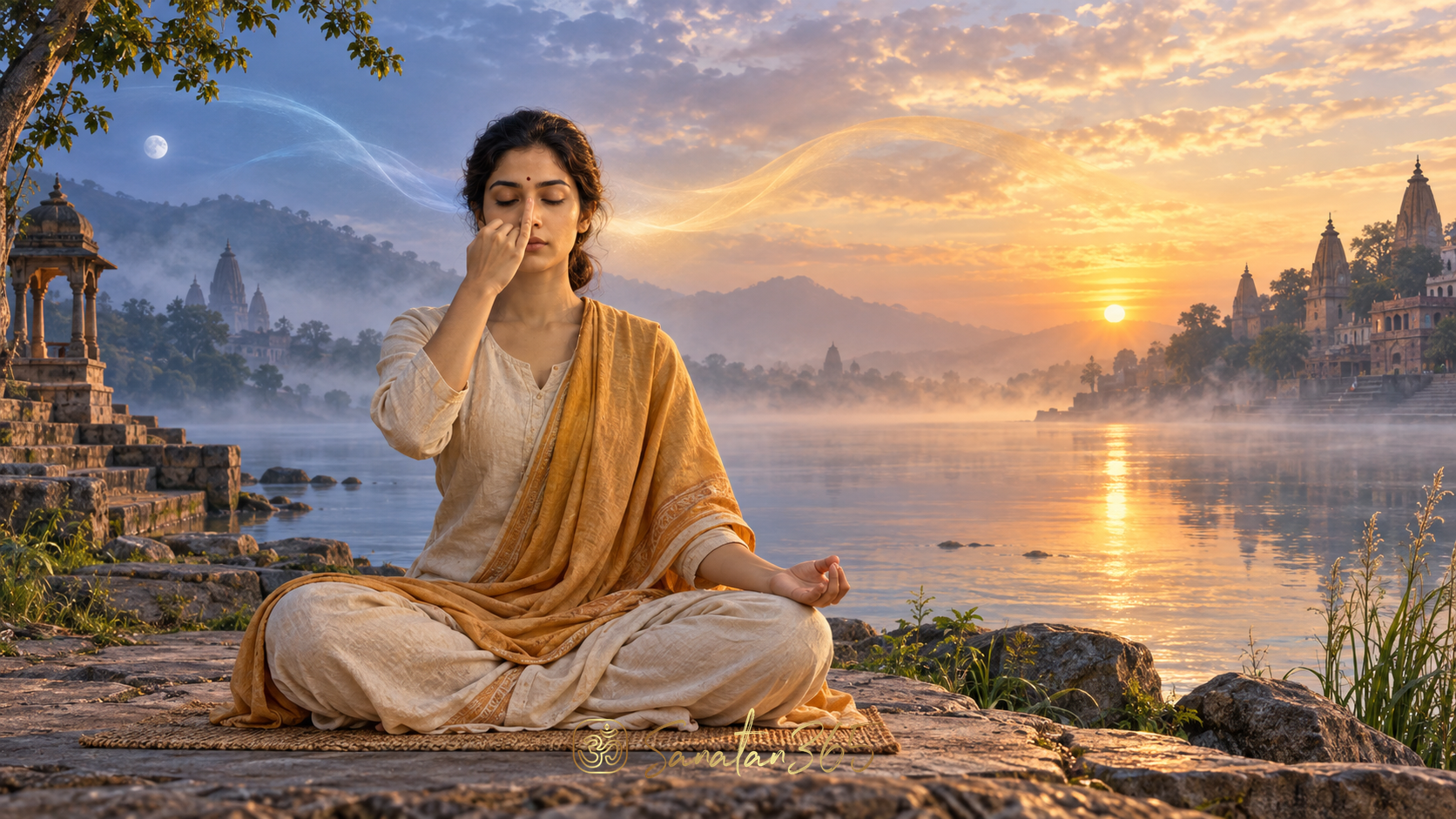
Nadi Shodhana Pranayama: Meaning and a Gentle Practice
Nadi Shodhana is alternate-nostril breathing practiced with steady attention. Its deeper yogic purpose is preparing breath and mind for cla…
 Wellness
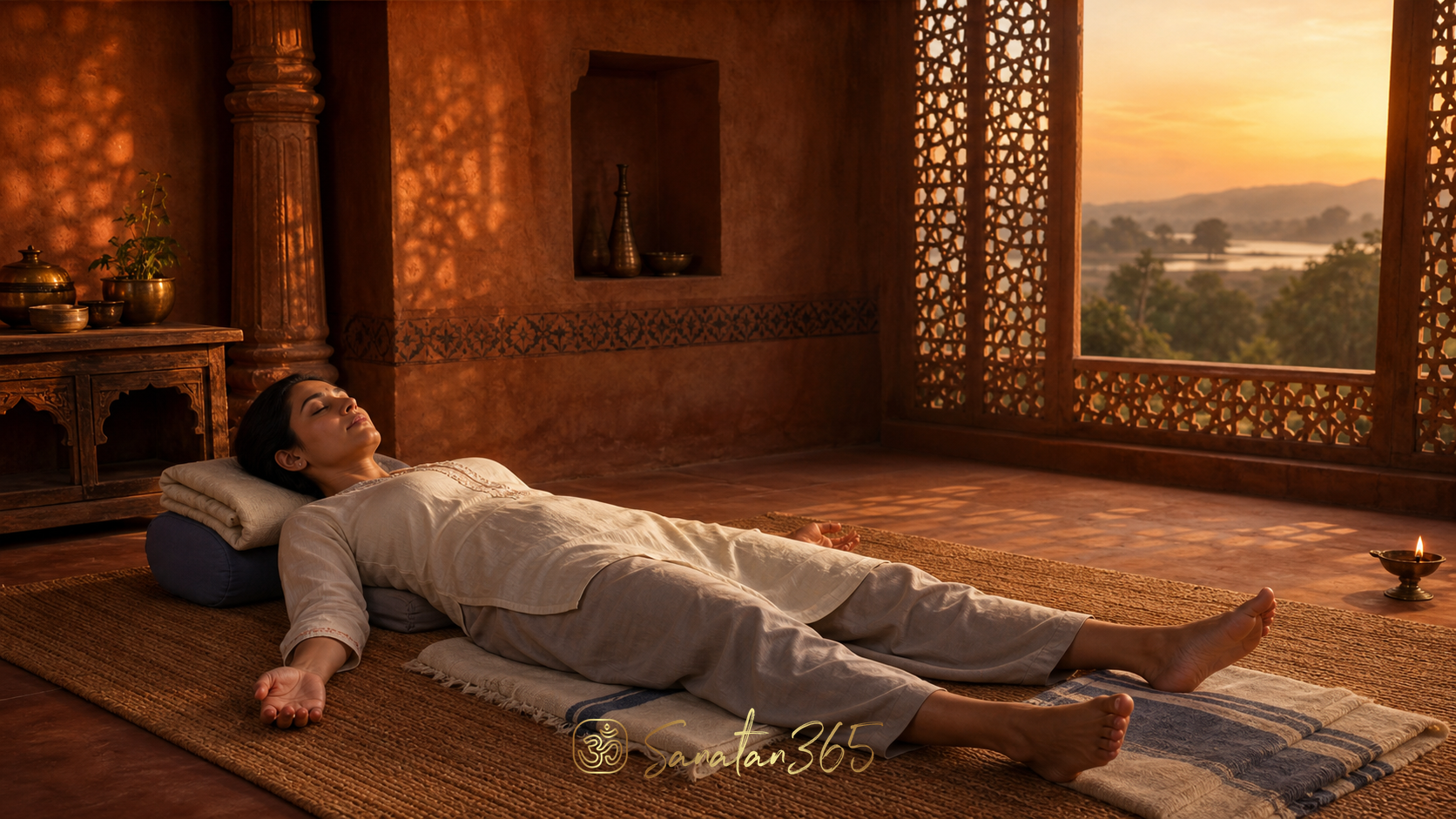
Shavasana Meaning: Why Corpse Pose Is a Practice of Conscious Rest
Explore Shavasana's meaning in Hatha Yoga, why stillness is not the same as sleep, and how beginners can practise corpse pose with attentio…
 Wellness
Bhramari Pranayama Meaning: A Careful Guide to Humming Bee Breath
Bhramari Pranayama is the humming bee breath described in the Hatha Yoga tradition. Learn its meaning, classical method, safety limits, and…