 Practices
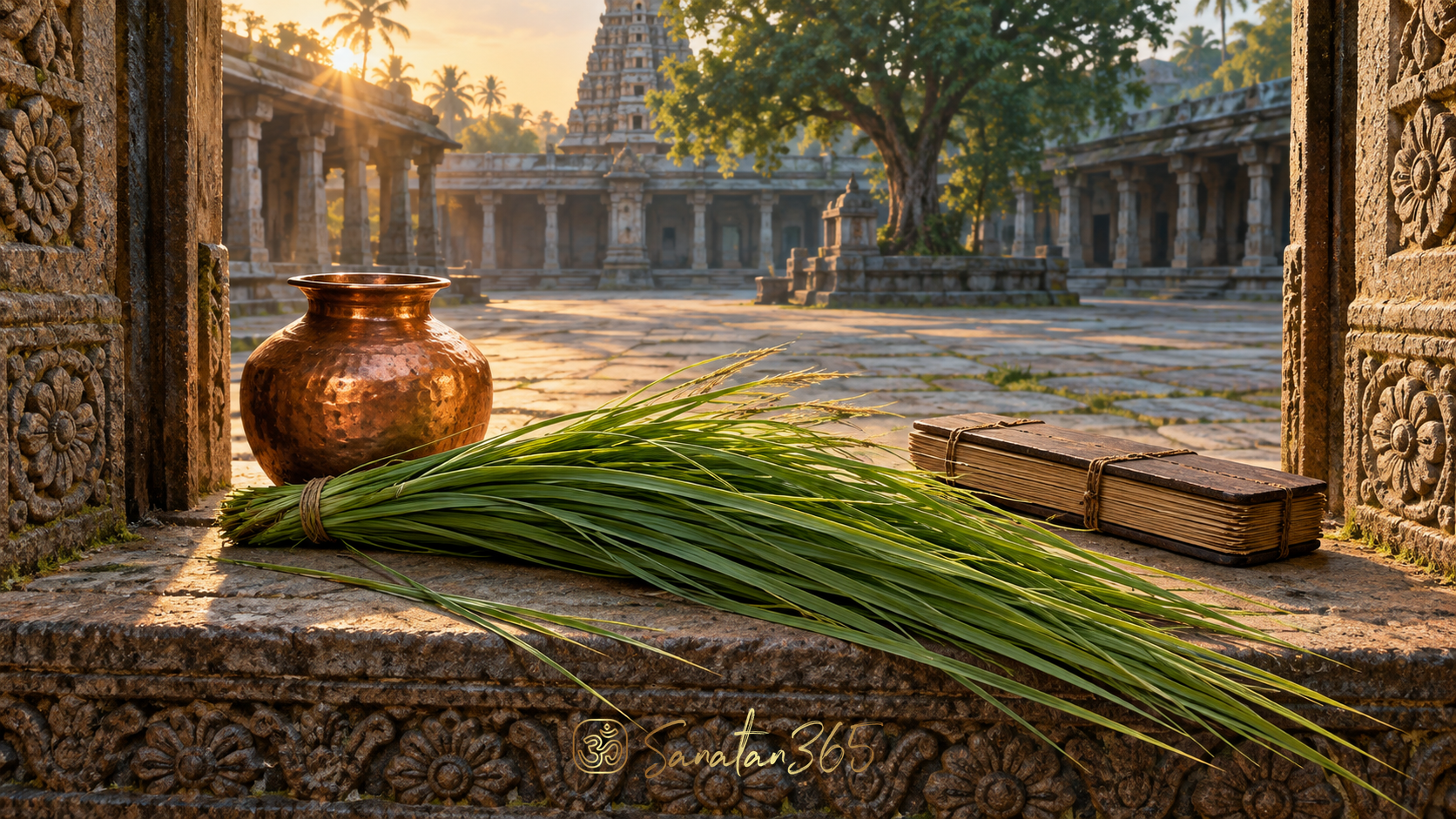
Kusha Grass Meaning: Why Darbha Has a Place in Hindu Rituals
Understand kusha or darbha grass, its traditional place in worship and ancestral rites, and how to approach varied customs with care.
Sep 26, 202611 min read
600
PracticesUnderstand kusha or darbha grass, its traditional place in worship and ancestral rites, and how to approach varied customs with care.
 Practices
Bhuta Shuddhi means the purification of the five elements: earth, water, fire, air, and space. In Hindu yogic and Tantric traditions, it is…
 Practices
Likhita japa turns mantra repetition into a written devotional discipline. Learn its meaning, how it differs from spoken and mental japa, a…
 Practices
Learn the meaning of Surya Arghya, why devotees offer water to the rising sun, and how to approach this daily Hindu practice with gratitude…
 Practices
Pranama is the Hindu practice of bowing with reverence. Its forms differ, but each can train humility, gratitude, and recognition of the sa…
 Practices
Chin Mudra joins the thumb and index finger in a quiet circle. Learn its meaning in Yoga and Vedanta, its difference from Jnana Mudra, and…
 Practices
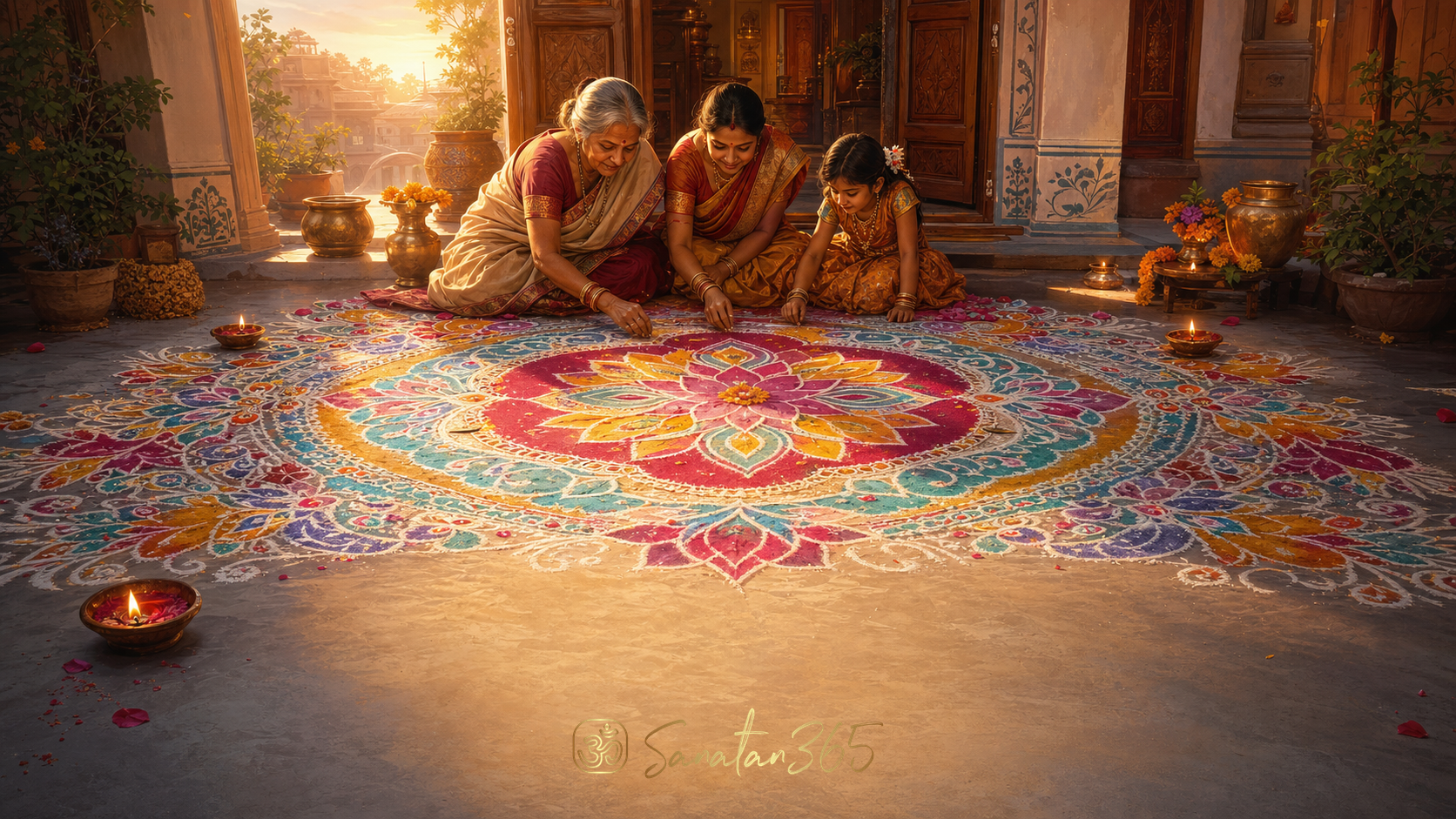
Rangoli turns an ordinary threshold into a place of welcome, joining beauty, hospitality, impermanence, regional memory, and daily devotion…
 Practices
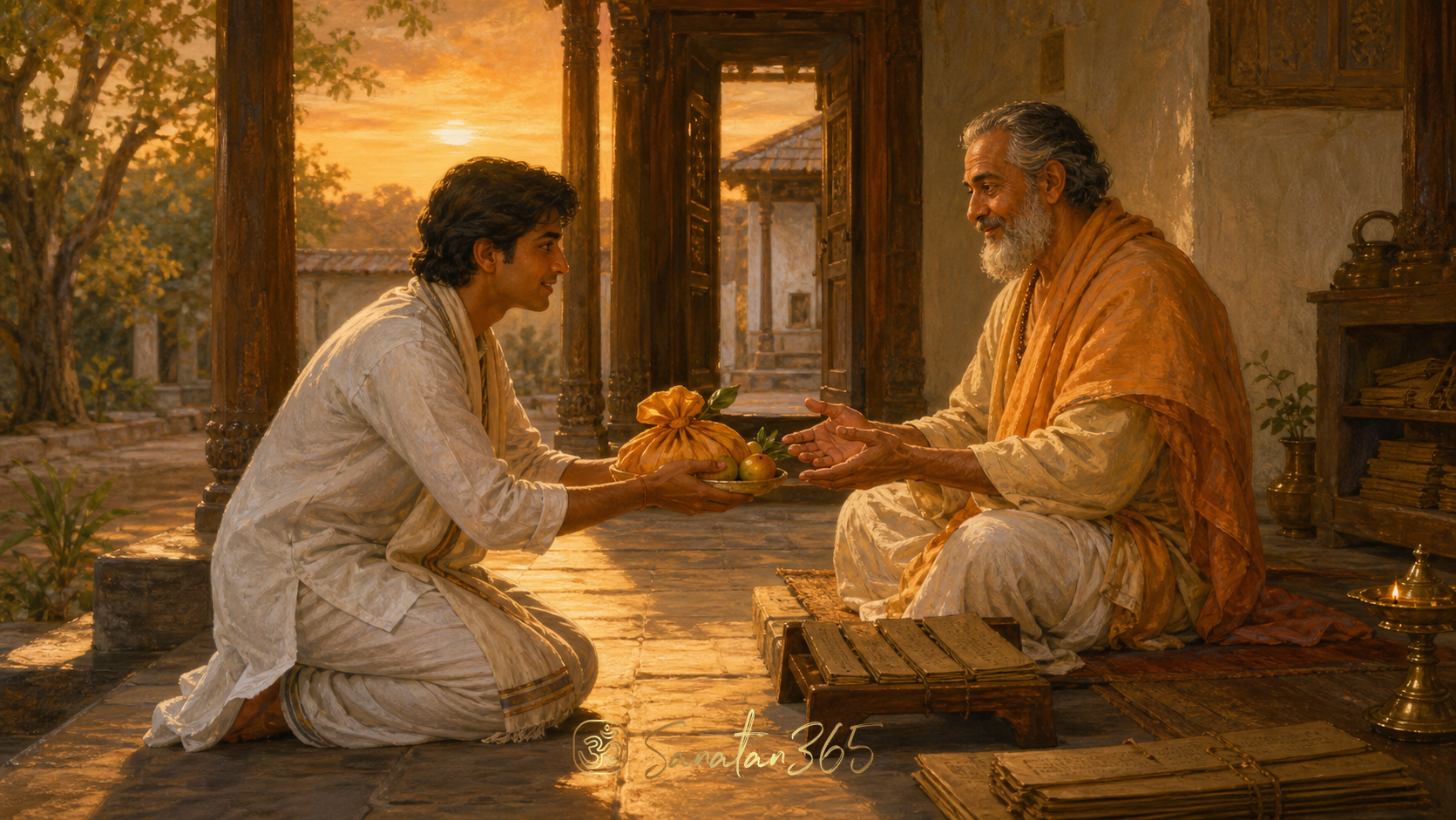
Dakshina is a traditional offering made after sacred teaching or ritual. Its deeper meaning joins gratitude with ethical reciprocity and re…
 Practices
Tapas is the steady inner heat created by wise discipline. Yoga and the Bhagavad Gita show how it can refine body, speech, and mind without…
 Practices
Anjali Mudra is more than a greeting. Explore how folded hands express reverence, gather attention, and turn an ordinary moment into an off…
 Practices
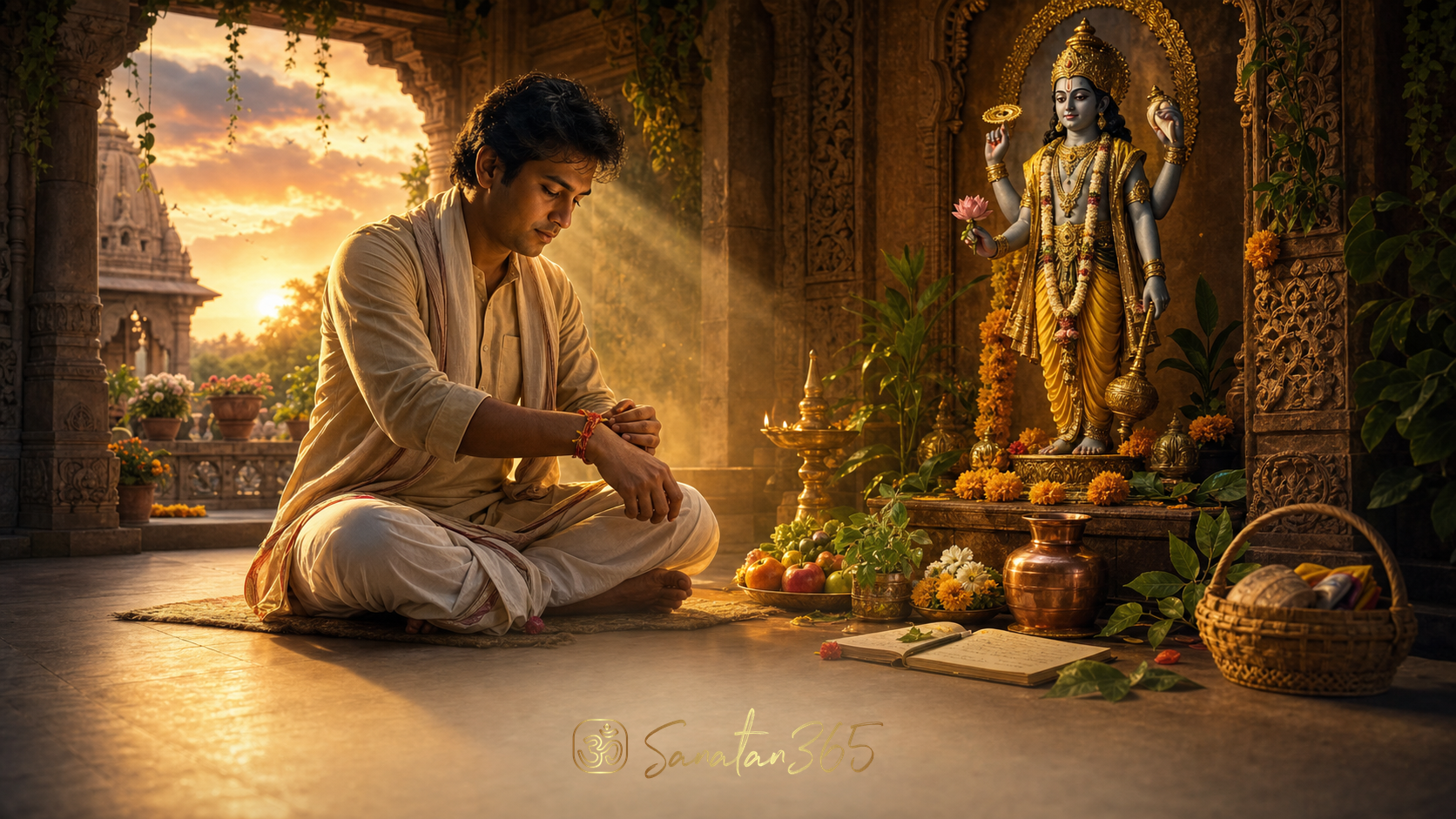
Vrata is a sacred Hindu vow expressed through disciplined worship, ethical restraint, charity, and sometimes fasting. Learn its meaning, fo…
 Practices
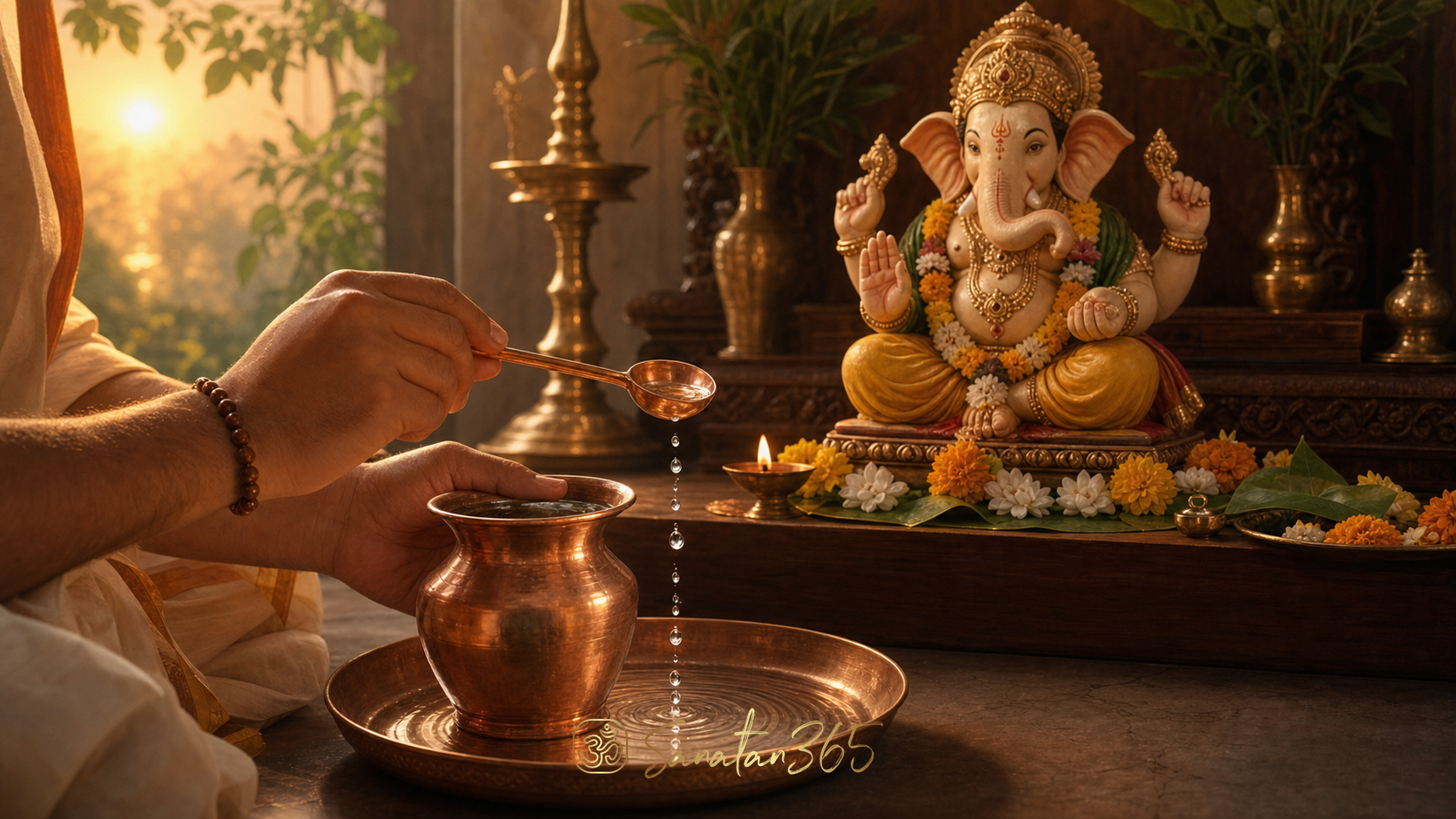
Achamana is the mindful sipping of water before Hindu worship. Learn its meaning, purpose, common forms, regional variation, and respectful…

